The Canal (1964)
nothing moves on the canal
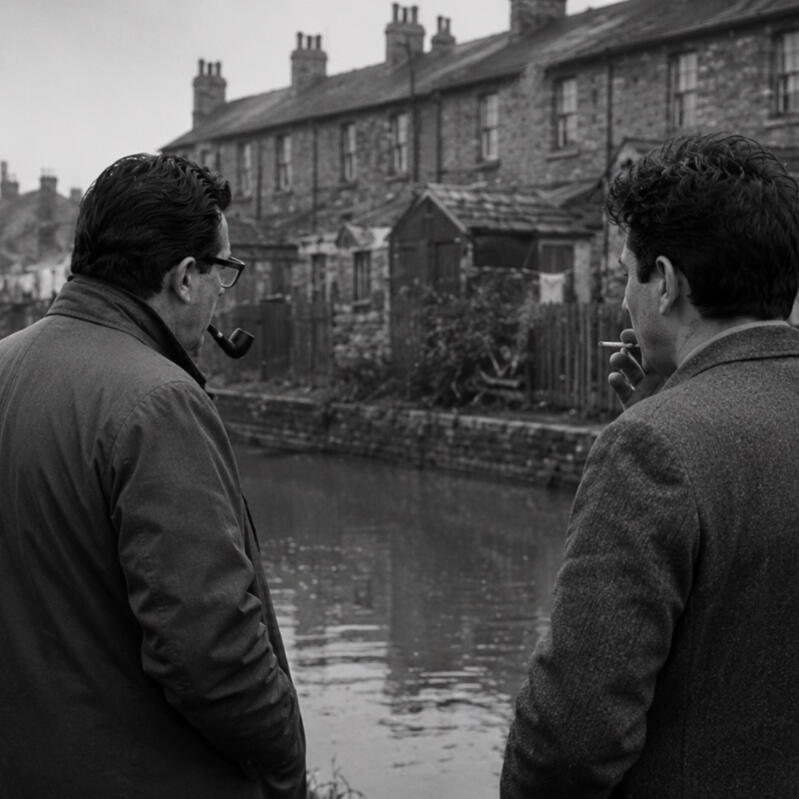
By the WaterOne of the best-known surviving photographs connected with The Canal shows Alistair Dunmore and Brian Hollis standing beside the water during location scouting in early 1964.Hollis later claimed the pair spent almost an hour looking across the canal without speaking. Eventually Dunmore lit his pipe and remarked, "If a boat comes through now we'll have to wait for it to bugger off."Whether the exchange happened exactly as remembered is uncertain. What survives in abundance is the impression that both men understood the canal itself would become one of the film's principal characters.
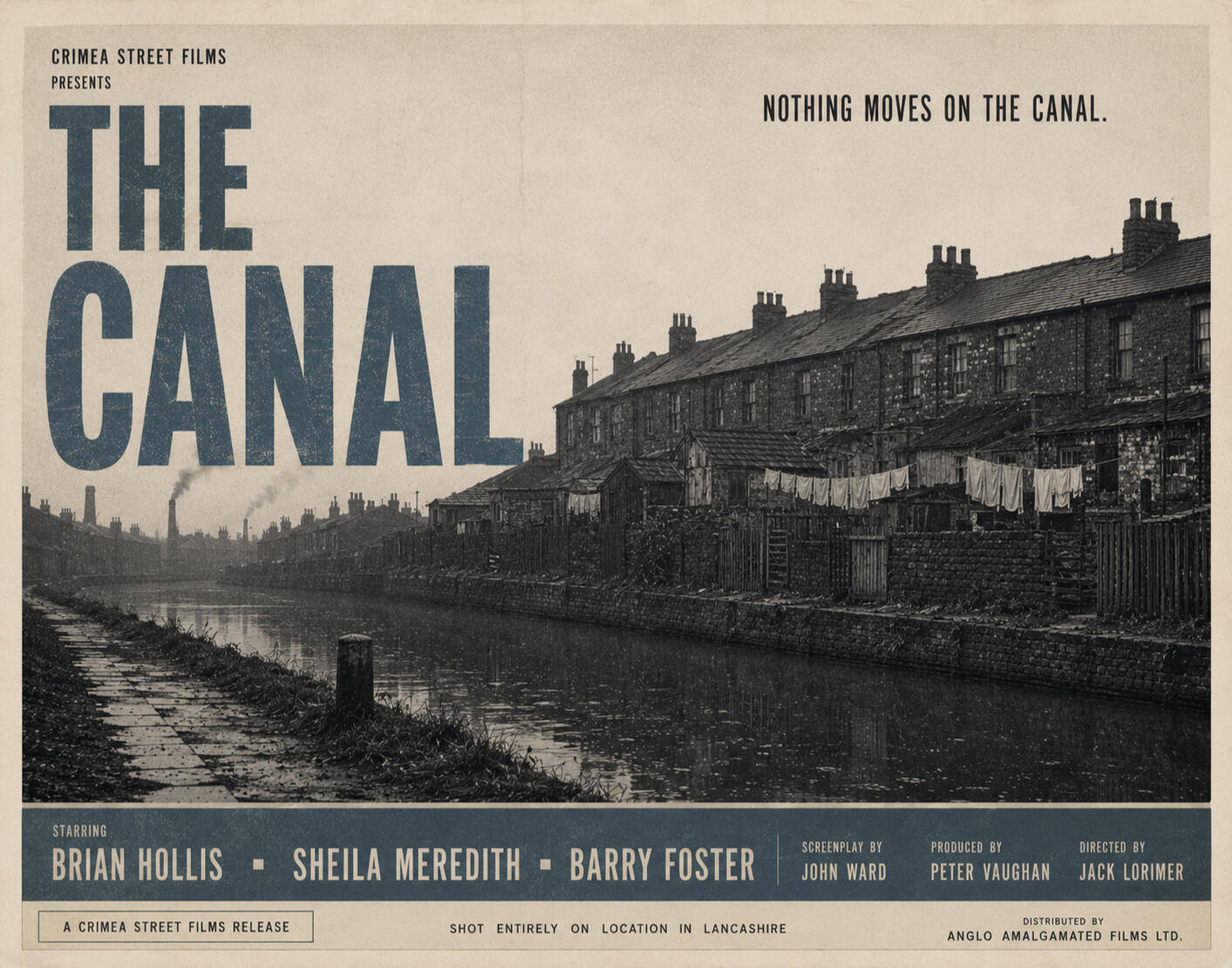
Released in 1964, The Canal remains one of Crimea Street Films' most unusual productions.Following Thomas Hargreaves, a retired canal maintenance worker returning to the waterways of his working life, the film has remarkably little interest in conventional storytelling. Instead, it concerns itself with abandoned industry, changing communities and the quiet persistence of places long after people have moved on.Its advertising campaign carried the simple line: Nothing moves on the canal.Contemporary audiences soon discovered this was less a slogan than a statement of intent.
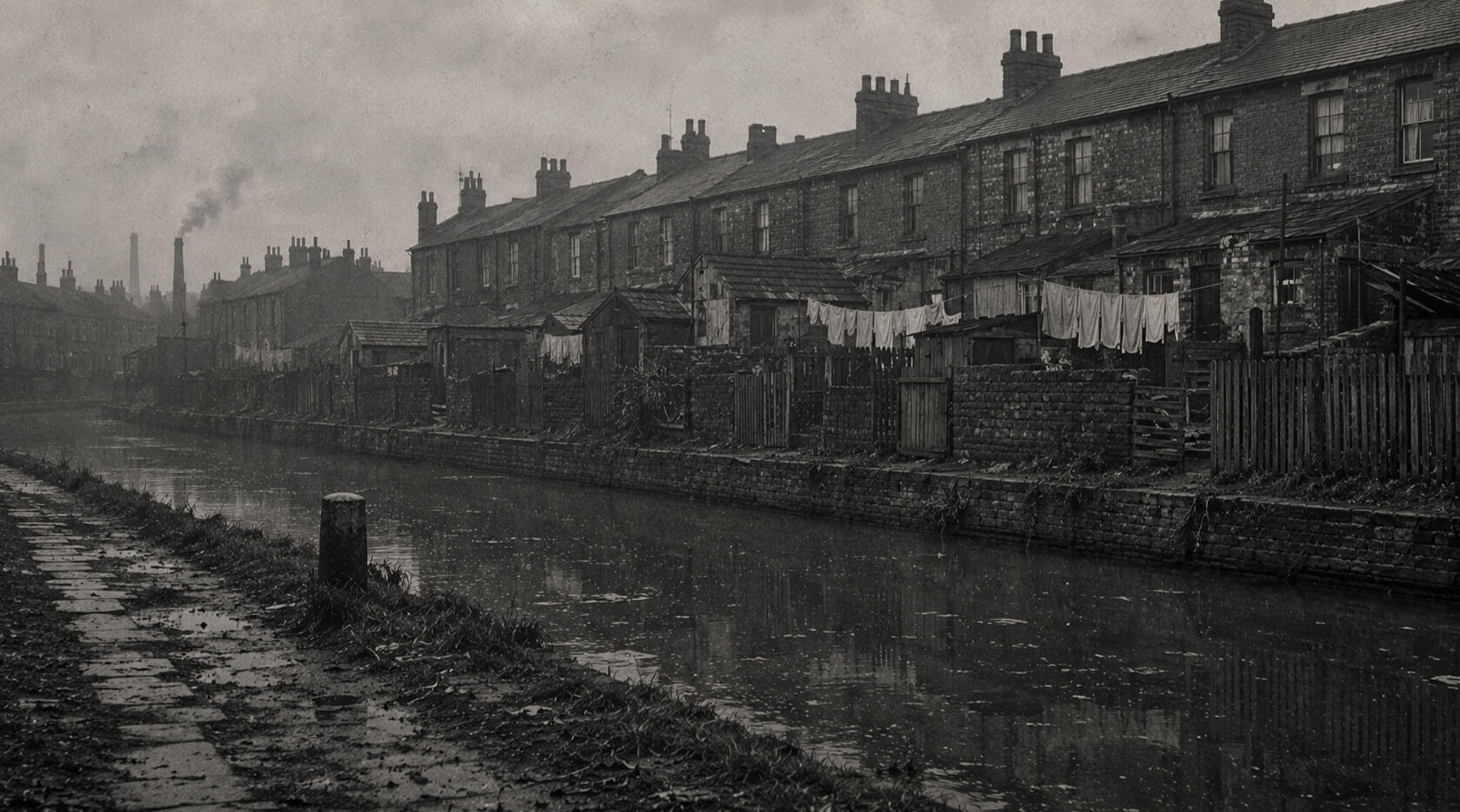
Few production stills survive from The Canal.This image became one of the best known, capturing the terraced houses, back gardens and washing lines that crowd the water's edge throughout the film.Several reviewers remarked that Dunmore appeared more interested in filming the landscape than the actors occupying it.
Brian Hollis (1936-2019 )Brian was born in Oldham in 1936, the son of a railway clerk and a school secretary. An average pupil by his own admission, he left school at fifteen and worked in a succession of jobs including a warehouse, a printer's and a small engineering firm.Having accompanied a friend to an amateur dramatic society meeting, he discovered he rather enjoyed being somebody else for an evening. A local repertory company followed, where his willingness to take almost any part earned him a reputation as reliable if not especially gifted.He first came to the attention of Crimea Street Films in 1958 when Alistair Dunmore saw him in a
small stage production in Rochdale. Dunmore reportedly remarked that Hollis looked as though he could "stand in the rain for two hours without complaining", which was considered a useful
quality at the studio.Hollis quickly became a familiar face in Crimea Street productions. He rarely played heroes and seemed more comfortable as ordinary men trying to make the best of difficult circumstances.
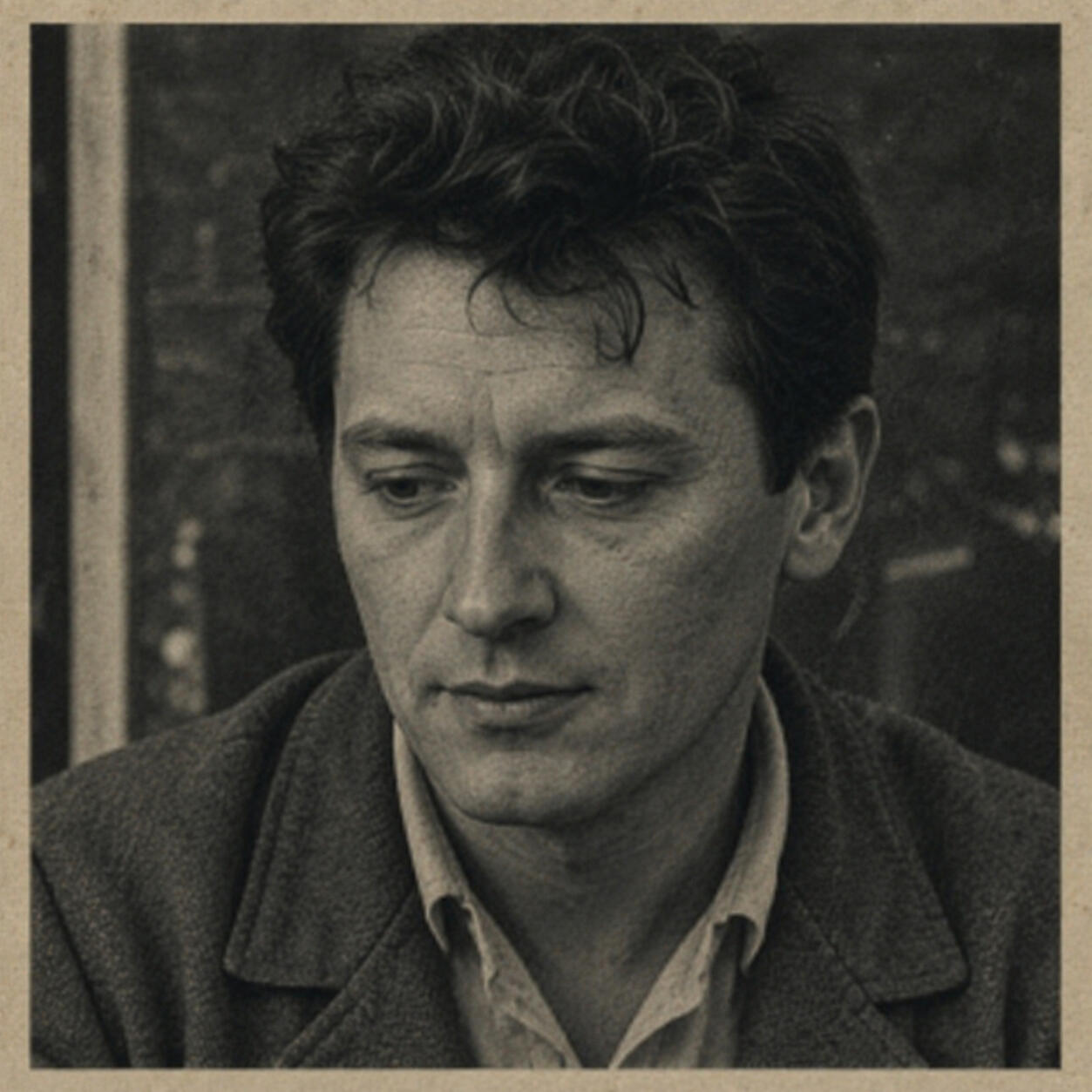
Audiences responded to his understated style, although critics occasionally suggested he had only one expression.
Friends claimed he had two but saved the second for special occasions.During the summer of 1961, he enjoyed a brief romance with fellow actor June Carver. The relationship ended amicably and the pair remained good friends, continuing to work together without awkwardness.Away from the studio, Hollis was sociable and known for his fondness for snooker, second-hand bookshops and any public house that served a decent pint of mild. He was also an enthusiastic fisherman, although former colleagues suggested he spent considerably more time talking about fishing than actually doing it.The closure of Crimea Street Films forced him to look elsewhere for work. Unlike some of his contemporaries, he never found lasting success in television or the larger film studios. He continued acting for several years before gradually leaving the profession altogether.

Later life took him rather further from Salford than many expected. He eventually settled in Australia, where he declined most requests to discuss his Crimea Street years. Former colleagues suspected he simply disliked looking backwards.Those who worked with him remembered a dependable actor with an easy sense of humour and no great interest in celebrity. One lighting technician remarked that Brian Hollis was the sort of man who would help you carry a wardrobe up three flights of stairs and then apologise for not being stronger.Looking back on his career, Hollis was characteristically modest, "We made the pictures we could afford and hoped somebody might watch them. Looking back, I
think perhaps we had a better time making them than most people did watching them.”In 2019, Brian died peacefully at his home in Bondi. His contribution to Crimea Street Films ensures that he remains part of the studio's story.
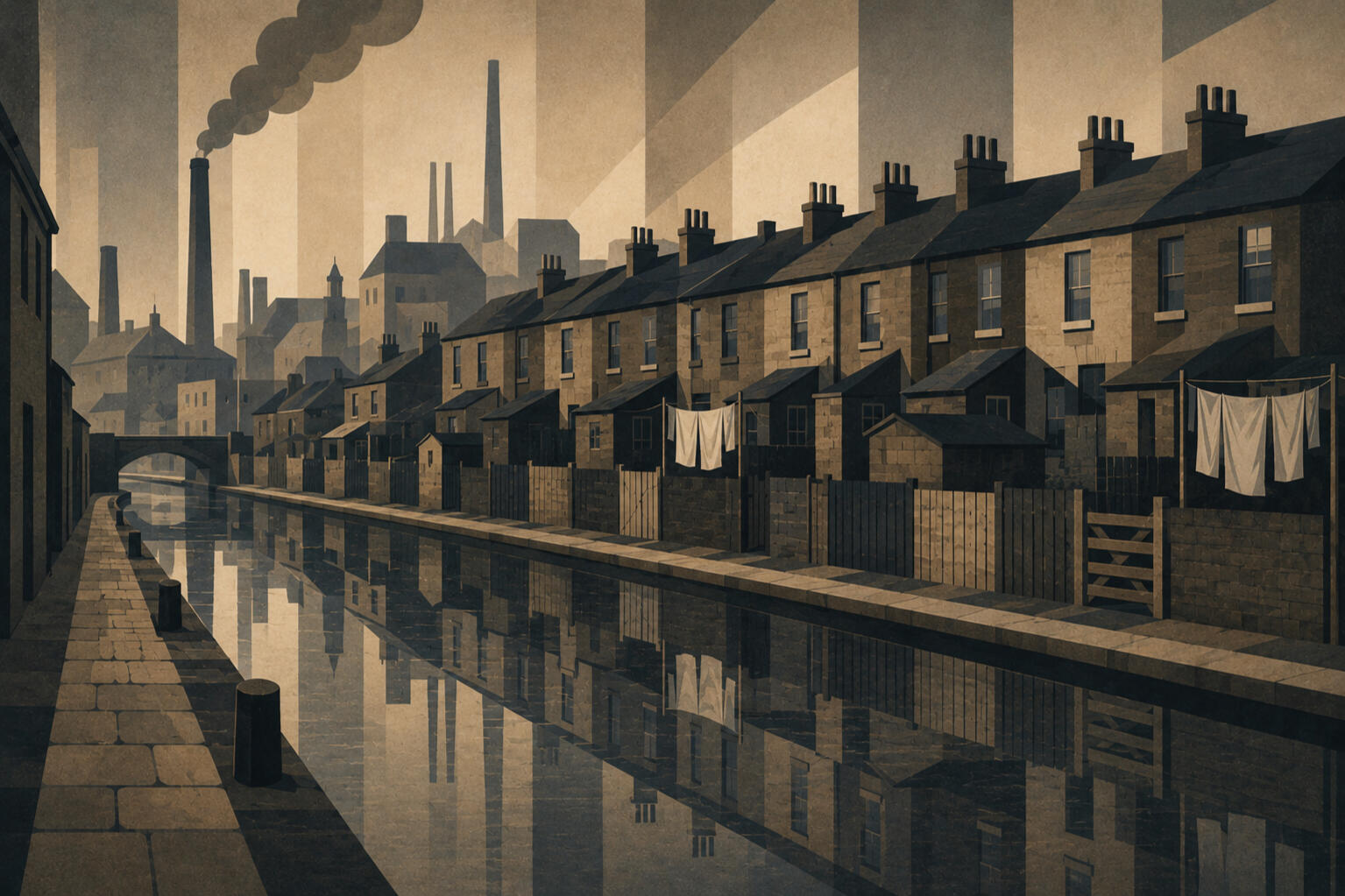
Olive James: The CanalThe striking industrial landscapes of The Canal have continued to inspire artists long after the film's original release. Among the most celebrated interpretations is Olive James's distinctive reimagining of the waterway, reducing canals, warehouses and terraced streets to bold geometric forms while preserving the quiet atmosphere of the original production.James later remarked that she was drawn less to the people than to the structures they left behind. The result is a work that shares the film's fascination with place, memory and the enduring presence of the industrial landscape.
Upon release, The Canal divided audiences and critics alike. The Manchester Evening Chronicle observed:
"The canal becomes less a setting than a witness."Picturegoer was less enthusiastic: "One waits patiently for the story to begin before realising that the canal is apparently the story."
Even sympathetic reviews admitted that the production demanded patience from its audience. Commercially, the film performed modestly but gradually acquired a loyal following among regional film societies and enthusiasts of Britain's industrial landscape.
From the ArchiveDuring filming, local children regularly gathered to watch production. One surviving account claims Alistair Dunmore paid sixpence to anybody willing to remain perfectly silent while cameras rolled. Whether this was generosity or desperation remains unclear.A production ledger from the period contains a mysterious expense simply listed as: "Towpath disturbances - 11s."